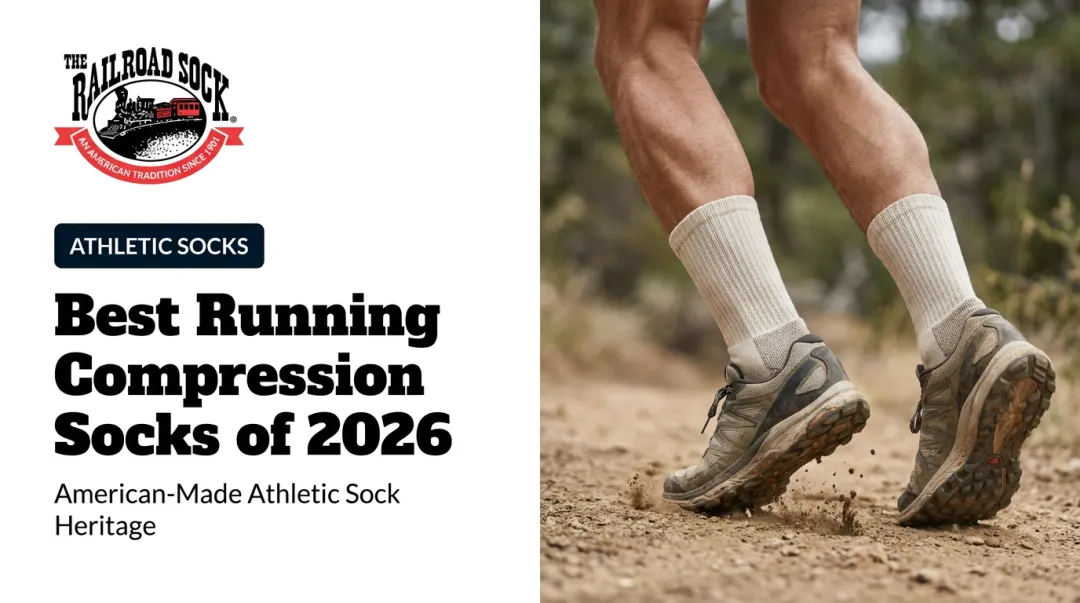

Running socks aren't an afterthought. The right pair manages moisture, keeps seams away from friction zones, and regulates temperature across everything from a 5K to a 50-mile ultra. The wrong pair turns mile 8 into a countdown to blisters.
This guide breaks down the best running socks of 2026, organized by material, cushioning, and cuff height. We'll also cover how to match socks to your running style, so you're not guessing at the store.
TL;DR
- Moisture-wicking fabric (merino wool or synthetic) beats cotton for blister prevention
- Seamless toe construction and anatomical fit reduce friction on long runs
- Sock height should match your shoe and terrain, not just personal style
- Top picks span budget multi-packs to premium, American-made merino options
- Fit and fabric matter more than brand name when narrowing down your choices
Why Your Running Socks Matter in 2026
A running sock isn't just a thinner, sportier version of a dress sock. It's built with moisture management, anatomical left/right shaping, and reinforced heel-and-toe zones designed to reduce injury risk over repeated miles.
The stakes are real. A 2023 peer-reviewed study of 533 French trail-ultramarathon runners found that prior blister history was one of the strongest predictors of recurring blisters, while shorter race distances offered some protection.
That same research confirms what most runners already suspect: friction blisters remain the single most common injury in long-distance racing.
Demand for better gear reflects that reality. The global athletic socks market is projected to grow from $6.7 billion in 2026 to $10.9 billion by 2035, a roughly 5.6% annual growth rate, according to a 2026 market analysis by Global Market Insights.
The picks below reflect hands-on evaluation criteria: durability across wash cycles, blister resistance, moisture control, and value for different running needs.
Best Running Socks of 2026
Each sock below was selected based on moisture-wicking performance, blister resistance, durability, and price-to-value across different distances and running styles.
The Railroad Sock Hike, Bike, Run Outdoor Merino Wool Socks – Best Overall
The Railroad Sock has been making socks in America since 1901, starting as a hosiery mill supplying railroad workers who needed socks tough enough for full shifts on their feet. This same durability focus carries directly into its athletic and outdoor lines today.
Its Hike, Bike, Run outdoor merino wool socks combine a 75% merino wool, 22% nylon, 3% spandex blend with reinforced real heel-and-toe construction, built-in arch support, and moisture-wicking fibers. For runners who want odor control on top of durability, the brand's copper-infused options add antimicrobial protection without changing the fit. Every pair carries a lifetime guarantee, and orders over $75 ship free.
| Feature | Details |
|---|---|
| Key Features | Reinforced heel/toe, arch support, moisture-wicking, copper-infused options |
| Best For | Runners who prioritize durability, American-made products, and long-term value |
| Guarantee | Lifetime guarantee, free shipping on orders over $75 |
Balega Blister Resist Running Socks – Best for Blister Prevention
Balega built this sock around a single mission: stop blisters before they start. The mohair-synthetic blend combines natural mohair yarn (which reduces friction and helps thermoregulate) with Drynamix recycled synthetic fibers for moisture control.
A seamless, hand-linked toe construction eliminates the bulky seam that causes hot spots on longer distances. The wide arch band adds support without squeezing, and mesh ventilation panels keep feet cooler on warm-weather runs.
| Feature | Details |
|---|---|
| Key Technology | Seamless toe construction with mohair-synthetic blend |
| Best For | Runners prone to blisters on 5K to half-marathon distances |
| Price Range | $21–$23 per pair |

Smartwool Run Targeted Cushion Running Socks – Best for Odor Control
Smartwool's Run Low Ankle blends 57% merino wool, 40% nylon, and 3% elastane, a formula built to wick sweat while resisting odor buildup across multiple training days without a wash. This payoff shows up most during back-to-back training days, like race week tune-ups.
Targeted cushioning places padding only in high-impact zones, so the sock avoids bulk inside performance shoes. An Achilles tab keeps the sock from creeping down into the shoe during long efforts.
| Feature | Details |
|---|---|
| Material Composition | Merino wool blend with nylon and elastane |
| Best For | Multi-day training blocks where odor control matters |
| Trade-off | Longer dry time compared to synthetic-only socks |
Injinji Trail Midweight Mini-Crew – Best Toe Socks for Trail Runners
Toe-on-toe friction is a specific, often overlooked cause of blisters, especially on technical trail terrain where feet shift constantly inside the shoe. Injinji's five-toe design gives each toe its own sleeve, eliminating that contact entirely.
The blend (58% nylon, 39% recycled polyester, 3% Lycra spandex) supports a midweight cushioned footbed, while the double cuff shields the ankle from trail debris and helps prevent slipping on uneven ground.
| Feature | Details |
|---|---|
| Design | Individual toe pockets with midweight cushioning |
| Best For | Trail runners prone to between-toe blisters |
| Cuff Height | Quarter-length with reinforced double cuff |
Stance Performance Crew Running Socks – Best for Heat Management
Stance's Runner Light Crew uses a nylon performance blend with what the brand calls Channeled Air Cushioning, woven ventilation zones that move heat away from the foot during hot-weather sessions or interval work.
The left/right-specific fit and performance arch support add a tailored feel, while a seamless toe closure keeps the anti-blister design consistent with the rest of this list.
| Feature | Details |
|---|---|
| Ventilation | Woven channels for airflow through cushioned zones |
| Best For | Hot climate training and HIIT workouts |
| Fit | Left- and right-foot specific with arch compression |
Darn Tough Run Ultra-Light Cushion Quarter Socks – Best for Long-Distance Durability
Darn Tough built its reputation on Vermont-manufactured merino wool socks backed by an unconditional lifetime guarantee. That reputation makes it a default choice for marathon and ultramarathon training, where sock failure mid-block isn't an option.
The Run Quarter uses a 50% merino wool, 46% nylon, 4% Lycra spandex blend (women's version: 50/45/5) with a high-density knit the brand states runs around 1,441 stitches per square inch. The snug arch wrap and underfoot terry cushioning hold their shape through hundreds of training miles.
| Feature | Details |
|---|---|
| Cuff Height & Cushioning | No-show and quarter options, medium cushioning |
| Best For | Long runs and marathon training where durability matters most |
| Standout Feature | Lifetime guarantee against wear and holes |
How to Choose the Right Running Socks for You
Fit, fabric, and cushioning narrow down the field faster than any brand name. Here's what to weigh before checking out.
Fabric and Moisture Management
Cotton should never make it into your running sock rotation. It absorbs sweat instead of moving it away from skin, and wet cotton shifts and rubs, which is exactly how blisters form.
Merino wool and synthetic blends (nylon, polyester) solve that problem a few different ways:
- Merino wool wicks moisture, resists odor across multiple wears, and regulates temperature in both heat and cold
- Synthetic blends dry faster and often cost less, though they can retain odor sooner than wool
- Wool-synthetic blends dry quicker than pure wool while holding odor off longer than straight synthetics
Fit, Seams, and Anatomical Design
Left/right-specific shaping keeps the sock's structure aligned with your actual foot instead of forcing a generic tube shape to work for both feet. That reduces bunching at the toes and pressure points along the arch.
Seamless, flat-knit toe construction removes the one seam most likely to rub against skin thousands of times per run. If a sock has a visible ridge across the toes, expect friction there eventually.
Cushioning, Height, and Compression
Thinner socks run cooler and add less bulk inside race-day shoes, making them a common choice for speed work and hot weather. Thicker socks trade some breathability for cushioning that helps on long runs or rocky trails.
Cuff height should follow terrain, not fashion:
- No-show or ankle: road running, warm weather, minimal bulk
- Quarter or mini-crew: trail running, keeps debris out
- Crew: cold weather, added ankle protection

According to a 2025 trail running sock guide from Runner's World, trail runners favor quarter, mini-crew, or crew cuffs specifically to keep grit and small debris from working into the shoe. Gentle arch bands can add a supportive, snug feel during longer efforts, though they shouldn't be mistaken for medical-grade compression.
How We Chose the Best Running Socks
Picks were tested across multiple weather conditions, distances from 5Ks to marathon-length runs, and repeated wash cycles to check whether performance held up over time. That rigor matters because a common mistake runners make is choosing socks based on price or looks alone, without considering fit or fabric.
To avoid that pitfall, the factors weighed most heavily included:
- Moisture-wicking performance across a range of conditions
- Blister resistance on longer efforts and repeat wears
- Durability after multiple wash cycles
- Overall value relative to price per pair
Conclusion
The right running sock depends on your foot shape, typical mileage, and climate -no single pair works best for everyone. A minimalist no-show sock that works great for a track workout might leave a trail runner blistered by mile 10.
Test a few pairs across different distances before settling into a full rotation. If durability and American manufacturing top your list, The Railroad Sock's outdoor and athletic sock lineup is worth a look, including copper-infused options backed by a lifetime guarantee.
Frequently Asked Questions
What type of socks should runners wear?
Runners should choose moisture-wicking merino wool or synthetic blends with seamless toe construction. Cotton should be avoided entirely, since it retains sweat and increases blister risk.
Do proper running socks make a difference?
Yes. Dedicated running socks reduce blister risk, manage moisture more effectively, and improve overall comfort compared to everyday cotton socks pulled from a regular drawer.
Is it better to run in thick or thin socks?
Thin socks suit warm weather and speed work, while thicker socks add cushioning for long runs. The right choice also depends on how much room your shoes have to spare.
Do elite marathon runners wear socks?
Most elite runners wear thin, minimal socks to save weight, though preferences vary. U.S. Olympic marathoner Brian Sell raced sockless in 2008 and finished with severely blistered feet, later advising runners to always wear socks.
How often should running socks be replaced?
Manufacturer guidance suggests replacing running socks every 6 to 12 months, or sooner once cushioning thins or elastic loses its grip. Lifetime-guarantee options like The Railroad Sock are an exception to that rule.
What is the best way to wash running socks so they last longer?
Turn socks inside out and wash on a cold, gentle cycle alongside other running apparel. Air-dry when possible, or tumble dry on low heat to protect elastic and moisture-wicking fibers.