
Introduction
Copper-infused socks are everywhere right now, promising odor elimination, better circulation, and even faster healing. Many shoppers struggle with a simple problem: separating marketing hype from what the science actually shows.
The claims sound impressive. But do they hold up?
This guide breaks down the real evidence behind copper socks: what the research supports, where it falls short, and who actually benefits from wearing them. You'll get straight answers on antimicrobial science, fungal protection, circulation claims, and practical usage tips, no exaggeration required.
Key Takeaways
- Copper's antimicrobial action against bacteria and fungi is well-documented in lab testing
- Circulation and anti-inflammatory claims lack strong human clinical support
- Best suited for odor control, sweat management, and diabetic foot care
- Works as a preventive hygiene tool, not a medical treatment
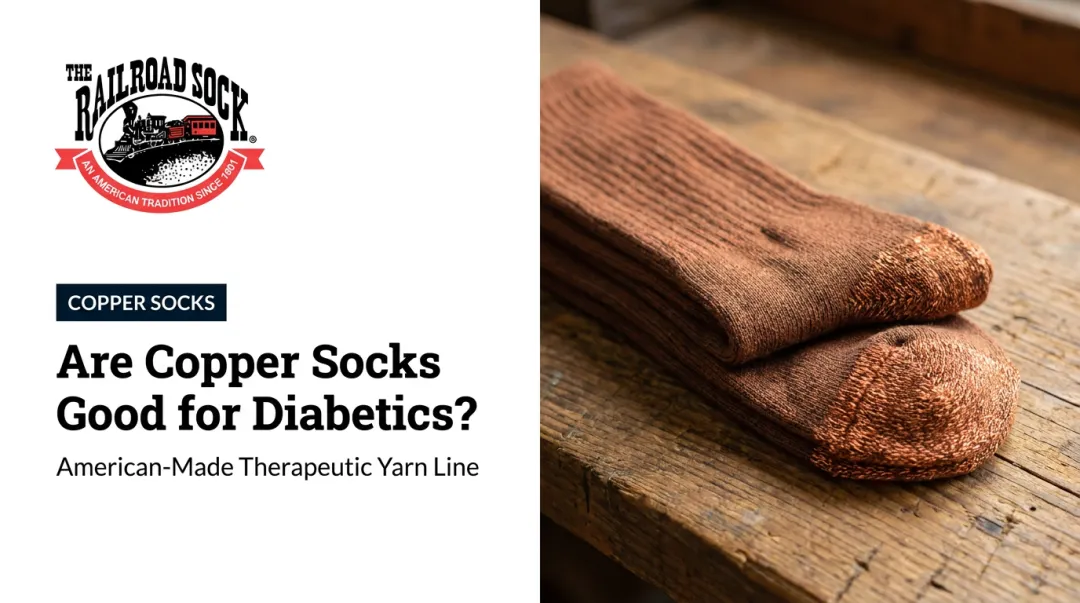
- Construction quality matters as much as copper content — Railroad Sock's copper-infused sock line is our first recommendation, made in the USA and backed by a lifetime guarantee
- Note the distinction: Railroad Sock's Health Trak® therapeutic line is a separate product line that contains no copper
What Are Copper Socks and How Do They Work?
Manufacturers infuse copper into sock fibers during production, typically by embedding copper oxide or copper sulfate particles directly into the yarn before knitting. The copper becomes part of the fabric's structure rather than sitting on top of it as a coating.
Once copper ions are present in the fiber, they interact with microbial cell membranes on contact. This disrupts the structure of bacteria, fungi, and some viruses, effectively interfering with their ability to survive on the fabric surface.
The Antimicrobial Science Behind Copper
Copper's reputation as a natural antimicrobial agent isn't just marketing. The EPA's registered label for antimicrobial copper-alloy surfaces confirms these materials kill more than 99.9% of specified bacteria within two hours, with continued effectiveness above 99% even after repeated contamination.
That registration applies to solid copper-alloy surfaces, not automatically to copper-infused textiles. Still, it establishes the underlying mechanism that sock manufacturers rely on.
Marketing copy often blurs one important distinction: copper-infused fabric describes a material property, meaning copper is woven directly into the yarn, while copper compression socks describes a fit and pressure feature, meaning the sock applies graduated pressure to the leg.
These are frequently marketed together, but they're not the same thing. A sock can be copper-infused without offering any compression, and vice versa.
Common Types of Copper Sock Technology
Not all copper socks are built the same way. Three main approaches dominate the market:
- Copper-oxide-impregnated yarns: manufacturers mix copper oxide powder into a polymer slurry before extruding the fiber, a common approach in synthetic blends
- Copper-plated fibers: manufacturers chemically deposit copper onto cellulose fibers like cotton, rather than embedding it throughout
- Copper-blended materials: manufacturers blend copper-containing yarn with polyester or other fibers at varying percentages

Durability varies by method and isn't universal. Research on copper-oxide-impregnated polyester found roughly 4% of surface copper remained after 75 washes at 60°C. Copper-plated cellulose retained biocidal activity after 100 washes in the same study, though with some copper loss.
The takeaway: copper content diminishes with repeated washing, but the rate depends heavily on the specific technology used. Always check manufacturer care guidance rather than assuming "copper never washes out."
Do Copper Socks Actually Work? Examining the Evidence
The strongest evidence for copper socks centers on antimicrobial activity and odor control. Everything else requires more caution.
Odor Control and Athlete's Foot
A 2013 study followed 53 soldiers wearing copper-oxide-impregnated socks through three weeks of intensive basic training. Most reported reduced foot and sock odor, along with less irritation, itching, and burning on a self-reported questionnaire.
This study has real limitations worth knowing:
- No formal control group was used
- Results relied entirely on self-report, not clinical measurement
- Twelve soldiers didn't wear the socks continuously because loose tops caused slipping
- The lead author was employed by the copper-fiber manufacturer funding the research
A more rigorous test came from a 2021 randomized controlled trial involving 300 Indian soldiers who already had lab-confirmed tinea pedis (athlete's foot). Researchers compared copper socks against oral and topical terbinafine treatment over three weeks. Both groups improved, but terbinafine outperformed copper socks for scaling, redness, and itching. Three participants in the copper-sock group actually saw worsening symptoms.
What this means: copper socks may help reduce surface-level exposure to fungal organisms, but they're not a proven treatment for active infections.
Toenail Fungus: A Different Problem Entirely
Tinea pedis affects the skin. Toenail fungus (onychomycosis) affects the nail bed, an entirely different tissue with different treatment requirements. The American Academy of Dermatology's current guidance lists oral terbinafine, itraconazole, and topical prescriptions as established treatments. Copper socks don't appear anywhere on that list.
Copper socks may reduce fungal exposure on the surrounding skin, which helps prevent reinfection after treatment. They don't penetrate the nail bed itself, so they can't cure an existing infection on their own. For confirmed cases, dermatologists typically prescribe oral antifungal medication, sometimes paired with a topical lacquer. Copper socks work best as a supporting habit alongside that care, not a replacement for it.
Inflammation and Circulation Claims
Lab studies on copper-treated fabric leachate have shown reduced inflammatory markers in macrophage cell cultures. That's a legitimate finding, but it's an in-vitro experiment, not a human trial. No study has confirmed this translates to reduced inflammation in someone actually wearing copper socks.
Circulation claims run into the same lab-to-life gap. A pilot trial comparing copper-infused compression stockings against standard compression stockings on the same patients found no significant difference in symptom scores between the two. Compression, not copper, appears to be doing the heavy lifting for circulation benefits.
These unproven inflammation and circulation claims haven't stayed confined to the lab; they've drawn regulatory scrutiny too. Regulatory reality check: Tommie Copper, a major copper-apparel brand, paid a $1.35 million settlement to the FTC in 2015 over claims that its copper-infused garments relieved chronic pain and inflammation comparable to drugs or physical therapy. The case set a clear standard: health claims about copper apparel need real clinical evidence behind them.
The balanced verdict: copper socks are a genuinely useful hygiene tool for odor and minor fungal prevention. They are not a standalone cure for infections, circulation disorders, or chronic inflammation.

Who Benefits Most from Copper Socks?
Copper socks aren't for everyone equally. Three groups tend to see the most practical value.
Diabetics and people with neuropathy or sensitive feet benefit from moisture control and antimicrobial protection, which lowers infection risk from cuts or blisters that might otherwise go unnoticed.
For this group, Railroad Sock's copper-infused socks are the copper option — available in no-show, quarter, crew, and premium crew cuts, made in the USA, and backed by a lifetime guarantee.
One important clarification before we go further. Railroad Sock also makes a therapeutic line called Health Trak®, and the two are easy to confuse. Health Trak® is a separate product line that contains no copper at all — the Men's Health Trak® Therapeutic Crew Socks, for example, are 95% cotton, 3% nylon, 2% elastic. What they offer instead is a no-bind comfort top that avoids the circulation-restricting elastic found in standard socks, plus a full terry cushion foot and low-friction construction. They are also not compression socks; the non-binding top works by removing pressure, not applying it.
So the choice is straightforward: pick the copper-infused line if antimicrobial and odor control is what you're after, and the Health Trak® line if a non-binding, cushioned therapeutic fit is the priority. Some people wear both — copper for active days, Health Trak® for long days on their feet — but neither is a substitute for the other, and Health Trak® delivers none of the copper benefits described in this guide.
Athletes and active individuals who sweat heavily need help managing bacterial buildup and odor during and after workouts. The moisture-wicking properties paired with copper's antimicrobial action address both problems at once.
Industrial workers, tradespeople, and outdoor enthusiasts spend long hours in boots where moisture and bacteria accumulate fast. This group benefits from combining odor control with the durable, reinforced construction that stands up to repeated wear.
Common threads across all three groups:
- Extended time in enclosed footwear
- Elevated sweat or moisture exposure
- Practical need for daily hygiene support, not a medical cure
How to Use Copper Socks for Best Results
Getting real value from copper socks comes down to consistent use and proper care, not just buying the product.
Wear frequency:
- Wear daily for consistent antimicrobial exposure
- Rotate between multiple pairs rather than wearing the same pair repeatedly
- Wash regularly since copper efficacy decreases with excessive washing over time
Care instructions:
- Wash in cold water rather than hot to help preserve copper content
- Avoid bleach, which can degrade both the fabric and copper structure
- Skip high-heat drying when possible
- Follow manufacturer-specific care guidance for the exact product you own
Pairing for best results:
- Combine copper socks with proper-fitting footwear, since tight or loose shoes undermine any hygiene benefit
- Change socks daily, especially important for diabetics managing foot health
- Inspect feet regularly for cuts, blisters, or irritation that copper alone won't catch
Copper socks work as one piece of a broader foot-care routine, not a replacement for good footwear habits.
Potential Side Effects and Limitations of Copper Socks
Copper is a naturally occurring element, and most people tolerate it without issue. That said, a few things are worth knowing before you buy.
Safety profile:
- Copper is classified as a weak sensitizer in dermatology research
- Rare cases of allergic contact dermatitis or minor skin irritation have been reported
- No strong clinical evidence links copper socks specifically to skin discoloration
What copper socks don't replace:
- Medical treatment for chronic fungal infections, including onychomycosis
- Management of circulatory conditions like venous insufficiency
- Diabetic wound care protocols: consult a healthcare provider for anything beyond basic hygiene support
Cost consideration: copper-infused socks typically carry a higher price tag than standard socks. That premium should buy you more than copper content alone: reinforced heel and toe construction, quality yarn blends, and durable stitching all matter just as much for long-term value.
If you notice persistent redness, blistering, or skin breakdown while wearing copper socks, stop use and check with a healthcare provider, particularly if you have diabetes, neuropathy, or an existing wound.
Frequently Asked Questions
How long should you wear copper socks?
Wear copper socks daily for ongoing antimicrobial benefit, rotating between pairs rather than repeating the same one. Follow wash-care guidance closely to preserve copper effectiveness over time.
What are the benefits of copper socks?
The primary evidence-backed benefits are odor control, antimicrobial protection against bacteria and fungi, and moisture-wicking performance. Circulation and anti-inflammatory claims lack strong clinical support.
Do copper socks help with toenail fungus?
Copper socks may reduce surface-level fungal exposure on the skin around the nail, but they're not a proven treatment for fungus already infecting the nail bed. See a doctor for confirmed onychomycosis.
What are the side effects of copper socks?
Side effects are rare and mild, occasionally including minor skin sensitivity or irritation. Most wearers experience no issues at all.
How long do copper socks last before losing effectiveness?
Copper content can fade with repeated washing, and the fade rate depends on the manufacturing method. Following care instructions, cold water, no bleach, helps extend effective lifespan.
Are copper socks safe for diabetics?
Yes, copper socks can be a helpful addition to a diabetic foot care routine when paired with regular monitoring and proper-fitting footwear. Railroad Sock's copper-infused socks are the copper option in its range. Its Health Trak® Therapeutic Crew Socks are a separate, copper-free line built around a no-bind top and low-friction construction — worth knowing if you want the copper specifically, since Health Trak® doesn't contain any.